Supplements live in a buyer-beware market. A claim on the label and a result in the bucket may be two very different things, and the distance between them is where I invest my attention.
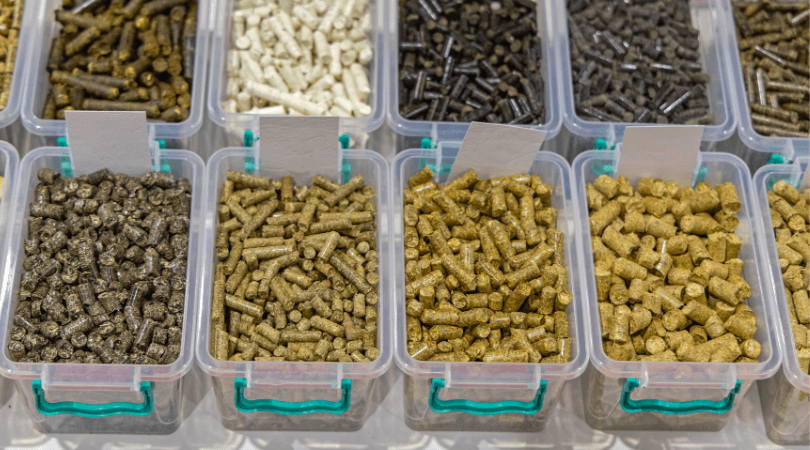 The supplement aisle is one of the least regulated places a horse owner spends money. Companies can make a lot of claims that only require a loose tie to the truth to make it onto a label. That isn’t an accusation. Products are developed to sell, and clearly stating what problem it addresses is what achieves the objective. My due diligence is the part the label doesn’t always have to do: clearly answer whether the supplement in the tub will reproduce an expected and desired result in my horse.
Start with the study, not the label
A claim is only as good as the research underneath it. The standard I want is peer-reviewed: a hypothesis that was tested, with results that were reproduced under stated conditions. The gold standard is a randomized, double-blind, placebo-controlled trial on horses. If a company markets an ingredient but can’t point to a study on that ingredient, in the form they’re actually using, on the species they are treating, they’re selling a hypothesis dressed as a solution. That doesn’t make the ingredient useless. It means the evidence isn’t there yet, and I get to decide what I do with that.
This is also where a proprietary blend gets in the way. I understand wanting to protect a formula — the recipe is intellectual property, and nobody wants their work copied. But the effect of “proprietary” is that the per-ingredient amounts are withheld, and those amounts are exactly what I need to run every test in this article: the dose, the form, whether the active clears a level that does anything.
Did they put in the dose the study used?
Here’s where most products quietly fall apart. A study that proves an effect proves it at a specific dose. If the research shows that 5 grams a day produced a response, and the scoop in front of me delivers 2.5, the label still gets to list the ingredient, but the protocol that produced the result is broken. I might get some benefit at half the dose, but I am no longer reproducing the results I was sold on.
Will the horse actually absorb it?
An ingredient on the label is not the same as an ingredient in the bloodstream. The same compound, in a different chemical form, can reach the body at wildly different rates, and quercetin is the clearest example I know of.
In its plain, free form, quercetin is poorly absorbed. In dogs, its absolute oral bioavailability came in at roughly 4 percent (Reinboth et al., 2010, British Journal of Nutrition) — the overwhelming majority never reached circulation. Attach it to a sugar and the picture changes. In rats, plain quercetin landed at about 2 percent, the glucoside form isoquercitrin reached 12 percent, and an enzymatically modified version reached 35 percent (Makino et al., 2009, Biological and Pharmaceutical Bulletin). And in people, a lecithin-based formulation reached plasma levels up to twenty times higher than the same dose of unformulated quercetin (Riva et al., 2019, European Journal of Drug Metabolism and Pharmacokinetics).
So “500 mg of quercetin” on two different labels can mean two completely different things in the horse, without either label saying a single false word. The form is the part you have to read for. (And worth noticing: every number I just gave you is from a dog, a rat, or a person. Hold that thought — it comes back at the end.)
Does it survive the bag, and then the stomach?
A compound only counts if it’s still active when it reaches the place it gets absorbed, and there are two stretches of road where it can erode along the way.
The first is the shelf. Plenty of raw ingredients break down on contact with light, oxygen, or moisture. An antioxidant that has been exposed to air in the tub in your feed room is degraded before it ever hits the bucket. Processing is part of this too. Pelletizing a supplement is convenient, and it keeps a horse from sifting out the powder they don’t like, but it applies heat and steam and then pressure, and heat-sensitive actives can degrade in the process. In pelleted swine diets, recovery of vitamin K fell to about 75 percent under high-temperature, high-compression pelleting, compared with roughly 84 percent under gentler conditions (Wang et al., 2021, Animals). What went into the mixer is not always what’s in the bag.
The second stretch is the gut itself. The equine stomach is an acidic environment, and some compounds and most unprotected probiotics are degraded there before they reach the small intestine or hindgut where absorption actually happens. Feed lactobacilli tested against simulated gastric and bile conditions survived poorly unless they were buffered by a protective carrier (De Angelis et al., 2006, Research in Microbiology). “It’s in there” and “it arrived intact” are two different claims.
When more is just more
Absorption has a ceiling. Every nutrient has a saturation point, where the body’s transporters are full and additional ingredient simply passes through. Past that point, more of the ingredient isn’t more effect. It’s more expense, leaving the horse in urine or manure.
This is why a label boasting two or three times the amount of an ingredient isn’t automatically stronger. If the horse saturates well below that number, the extra is doing nothing but making the tub feel generous. And a cheap ingredient is easy to overload — if it costs the company almost nothing, they can put two and a half times the useful amount in there all day long and let the big number do the selling. A high number on the label may be a marketing decision and not a biological one.
The right tool for the outcome you want
Two products can share a shelf label and be built for completely different jobs. Joint supplements are the example I keep coming back to with my own horses. Supporting a young, sound joint to keep it healthy as long as possible is one goal. Keeping a geriatric horse with existing damage comfortable, slowing further degeneration, and calming inflammation is a different goal. The ingredients index on different mechanisms — some on cushioning, some on inflammation, some on oxidative stress — and the right one depends entirely on the outcome you’re actually after. Buying a preventive cartilage-support product for an arthritic senior is using the wrong tool, even if it’s a good formula.
The same is true even when two ingredients aim at the identical target. Quercetin and cromolyn both calm mast cells, the cells that drive allergic responses, but they don’t work the same way: in cultured human mast cells, quercetin worked prophylactically, building protection before exposure, while cromolyn had to be present at the moment of the trigger or it rapidly lost effect (Weng et al., 2012, PLOS ONE). Same destination, different route. Which one fits depends on whether you’re preventing a problem or reacting to one.
Who was actually in the study?
When a company points to a study, the next question is simple: proven on whom? A real finding in the wrong population can still be the wrong answer for your horse. Joint research, for instance, often runs on young, fit racehorses — animals with acute, exercise-driven inflammation, excellent blood supply, and a huge capacity to repair themselves. A result in that group doesn’t automatically carry over to a twenty-two-year-old with chronic, structural change. Different body, different biology, potentially different outcome.
And here’s the sharpest version of it, the one I promised to come back to. A great deal of the most-cited supplement science isn’t equine at all. The quercetin absorption numbers above came from dogs, rats, and people. The allergy research behind several popular ingredients — spirulina included, where the supporting trial was conducted in people with allergic rhinitis (Cingi et al., 2008, European Archives of Oto-Rhino-Laryngology) — lives almost entirely outside the horse. The underlying biology may well translate. But “may” is the honest word, and a study population that looks nothing like your horse is a reason to ask more questions, not fewer.
What I’m actually buying
None of this means supplements don’t work, or that the industry is out to get you. It means the label is written to balance information and marketing, and the answers that decide whether a product works aren’t always volunteered. Citation of a real study. Verified inclusion of the therapeutic dose in every serving. Presented in a form the horse can absorb. Packaged to survive the journey to the gut. Not over the saturation ceiling so I’m paying for what I don’t need. The mechanism matched to the outcome I want. Studied in something that resembles my horse. When you have all of those checked off, you’re buying results you can reasonably expect to reproduce.
References
- Reinboth, M., Wolffram, S., Abraham, G., Ungemach, F.R., & Cermak, R. (2010). Oral bioavailability of quercetin from different quercetin glycosides in dogs. British Journal of Nutrition, 104(2): 198–203.
- Makino, T., Shimizu, R., Kanemaru, M., et al. (2009). Enzymatically modified isoquercitrin is absorbed more easily than other quercetin glycosides or aglycone after oral administration in rats. Biological and Pharmaceutical Bulletin, 32(12): 2034–2040.
- Riva, A., Ronchi, M., Petrangolini, G., et al. (2019). Improved Oral Absorption of Quercetin from Quercetin Phytosome, a New Delivery System Based on Food Grade Lecithin. European Journal of Drug Metabolism and Pharmacokinetics, 44(2): 169–177.
- Wang, H., Yang, P., Li, L., Zhang, N., & Ma, Y. (2021). Effects of Sources or Formulations of Vitamin K on Its Stability during Extrusion or Pelleting in Swine Feed. Animals, 11(3): 633.
- De Angelis, M., Siragusa, S., Berloco, M., et al. (2006). Selection of potential probiotic lactobacilli from pig feces to be used as additives in pelleted feeding. Research in Microbiology, 157(8): 792–801.
- Weng, Z., Zhang, B., Asadi, S., et al. (2012). Quercetin is more effective than cromolyn in blocking human mast cell cytokine release and inhibits contact dermatitis and photosensitivity in humans. PLOS ONE, 7(3): e33805.
- Cingi, C., Conk-Dalay, M., Cakli, H., & Bal, C. (2008). The effects of spirulina on allergic rhinitis. European Archives of Oto-Rhino-Laryngology, 265(10): 1219–1223.
A few definitions, because this can all be confusing
Active ingredient. The part of a listed ingredient that actually does the work — not the total weight printed on the label. The two are not necessarily the same number.
Concentration. What percent of the raw ingredient is the active. A DHA-from-algae meal might be only a fraction DHA by weight; the rest is everything else in the meal.
Bioavailability. Of the active that’s actually present, the fraction that crosses into the bloodstream. This is a second discount, applied on top of concentration.
Bioactive form. The same molecule can exist in different chemical forms — bound to a sugar, formulated with lecithin, left plain — and the form changes how much is absorbed. “Quercetin” on two labels can behave completely differently for this reason.
Dose. The amount actually delivered per serving. The number that matters is the dose of active, not the dose of listed ingredient.
Therapeutic dose. The amount of active, reaching circulation, that a study showed produced the effect. Below it, you may have something in the bucket, but not the thing the study measured.
Sub-therapeutic dose. An amount that’s present on the label but sits below the level that does anything measurable. Common, and legal, and the reason “it’s in there” isn’t the same as “it works.”
Efficacy. Evidence that the ingredient produces the intended effect under controlled conditions. Separate from whether a given product contains enough of it, in the right form, to reproduce that effect.
Saturation point. The ceiling past which the body can’t use any more. Above it, extra ingredient is expense, not effect.
Frequently Asked Questions
If the label says 4 grams, am I getting 4 grams that works?
Not usually, and this is the single most useful piece of label math I can give you. Say a product lists 4 grams of a DHA-from-algae ingredient, and that ingredient is 16 percent DHA by weight. That means only about 0.64 grams of the serving is actually DHA — 4 grams times 0.16. Then bioavailability takes its own cut: only a fraction of that 0.64 grams crosses into the bloodstream. So “4 grams” on the front of the tub can quietly become a few tenths of a gram of active reaching the horse. If the dose that worked in the study was higher than what’s left after both discounts, you are not getting the dose the study measured — no matter what the big number on the label says. (The 16 percent here is just to show the arithmetic; the real figure depends on the specific ingredient.)
How do I know if a supplement actually works?
I start in one place: is there a peer-reviewed study on that ingredient, in the form the product actually uses? Not a testimonial, not a claim, a study with a tested hypothesis and reproducible results. If that exists, the next question is whether the serving delivers the dose the study used. A real study at a sub-clinical dose is still a product that won’t reproduce the result. Study first, then dose — that’s the order I run.
Why does the form of an ingredient matter so much?
Because what’s on the label isn’t what reaches the bloodstream — the form decides that. Quercetin is the clearest case: in its plain form it’s only a few percent absorbed, but attached to a sugar, or built into a lecithin-based formulation, the amount reaching circulation can climb many times over. So two tubs can both say “quercetin” and behave completely differently in the horse. When a product leans on an ingredient, I want to know which form of it I’m buying.
Is a bigger number on the label better?
Not on its own. Absorption has a ceiling. Once the body is saturated, extra ingredient doesn’t do extra work — it leaves in the urine or the manure. So a label boasting two or three times the amount of a cheap ingredient isn’t necessarily stronger; it may just be a bigger number doing the selling. I’d rather see an effective dose of the right form than a giant dose of something the horse can’t use.
Does pelleting hurt a supplement?
It can, depending on what’s in it. Pelleting is convenient and keeps a horse from sifting out the powder, but the process uses heat, steam, and pressure, and heat-sensitive ingredients can degrade along the way. What went into the mixer isn’t always what ends up in the bag. It doesn’t make pellets bad — it makes the question worth asking when a product’s active ingredient is one of the delicate ones.
Can I trust a study that was done in people or other animals?
Sometimes, but it’s a reason to ask more questions, not fewer. A lot of the most-cited supplement science was done in people, dogs, or rats rather than horses. The underlying biology may translate — but “may” is the honest word. When the study population looks nothing like my horse, I treat the finding as a promising lead, not a guarantee, and I want to see whether anyone has checked it in horses specifically.