Horses have long been viewed as livestock. So everything we invest in them tends to arrive with a question attached: yeah, but what does it do?
The question we attach to horses
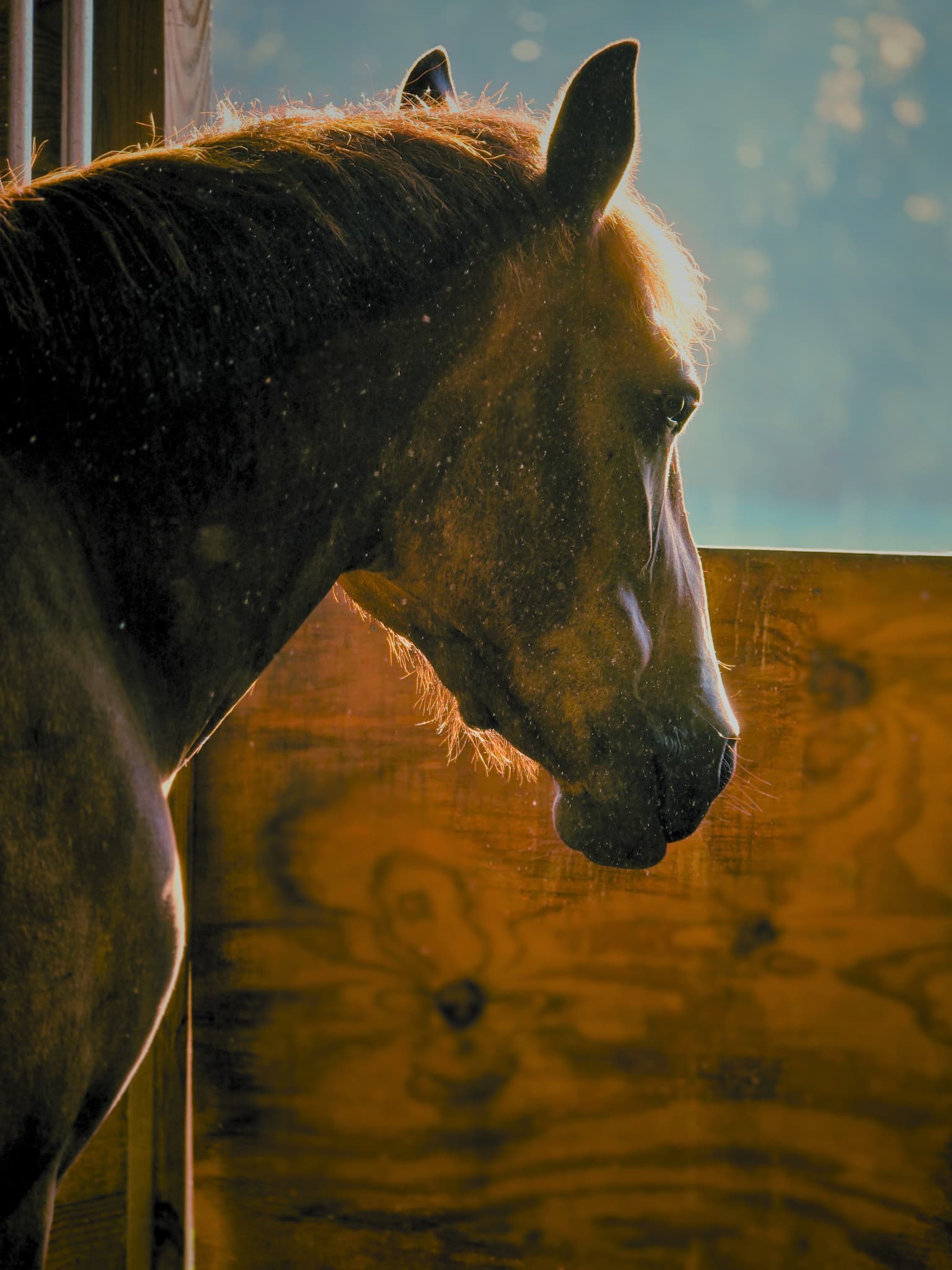
When people find out I have horses they often ask, “So what do you do with them?” and what they usually mean is: what does your horse do as labor that justifies you having them? The question is open to interpretation, but that’s how I’ve always heard it — what’s the return on the investment, and it has to come back in the form of some kind of work the horse does.
Among those of us in the community it could also be a way to gather information on experience, points of interest and potential dissimilarities. For example, if I answer that question with “I compete in three day eventing” a different profile would be formed in the asker’s mind than if I said, “I trail ride.”
But, in the final wash, horses are generally regarded as livestock, and livestock earn their keep. That means the upkeep, the money, the time and attention have to be justified by the outcome otherwise… why are you doing it?
Letting Go Of the Justification
When somebody asks why I give my horse this or that product there’s often this pull to explain the benefit. And if I walk that line of questioning all the way out, very often what’s waiting at the end of it is the horse’s labor again.
Take joint supplements as an illustration. The primary reason to feed a joint supplement is to reduce the inflammation and pain that come with joint use, wear, or damage but follow it into the secondary or the tertiary reason and it becomes: so the horse can keep doing the work. The benefit keeps resolving back into productivity. Doing.
I’m more into being with horses.
Because it makes them feel good, and it makes me feel good
It’s just a pasture pet — why put that much money and effort and time into it?
As someone who has a history, a present and a future with palliative horse cases my answer is distilled into this: Because it makes them feel good, and it makes me feel good. That’s the whole answer.
Caring for an animal, to me, isn’t a business exchange. It isn’t I do this for you and you do this for me — not in the livestock sense we grew up with. I don’t need my horse to earn the care. The care isn’t a transaction I’m waiting to be paid back on.
I’m not demonizing the working horse
If you have a purpose for your horse, that is not a thing to feel bad about. I very much enjoy riding, and would love to learn driving… but it just isn’t a priority. Overall, this arrangement has been a pretty good deal for both species as evidenced by how healthy in size the horse population is. We have coadapted toward success together — and there’s a long, long history of it. We give them safety and food and shelter; they give us the labor we need.
So please don’t get your back up if you do lean more into your horse as your working partner. I’m looking to coexist as a equitable answer, not take away yours.
What are they like?
Now imagine somebody says, oh, you have a dog? Yes. What kind? And I tell them — Trooper, a Great Dane–boxer mix and Nandi, a Rhodesian Ridgeback. And then they ask me what they’re like.
They don’t ask me what I do with them.
I would love for that to be the conversation we have about horses. I would love for what are they like to be the way it starts.