Don’t Get Choked Up
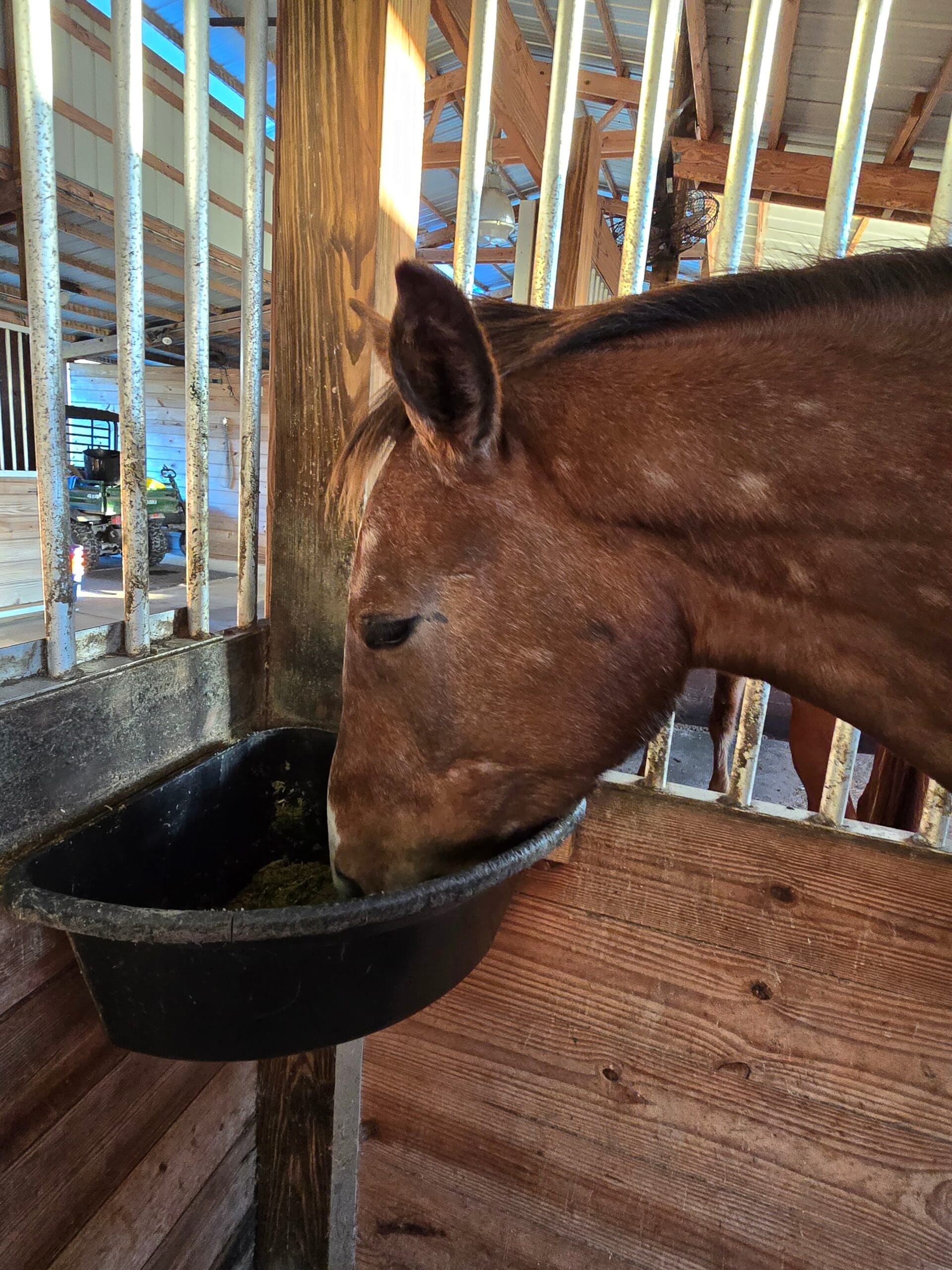
Choke gets treated as a feeding-management problem: soak the beet pulp, slow down the horse that bolts. Those things matter — but they are pieces of one underlying mechanism, and it isn’t the water in the bucket. It’s saliva. Once you see the role saliva plays, the things that actually prevent it line up and start to make sense.
What moves a bolus — and what makes it
When a horse chews, feed is mixed with saliva and formed into a bolus that travels down the esophagus by muscular contraction. What lets it pass cleanly isn’t the moisture in the feed — it’s latherin, a surface-active protein in saliva that sharply lowers surface tension. Equids appear to have adapted it specifically to wet and soften the dry, fibrous food they are built to eat. When a bolus isn’t adequately coated, it can lodge. That is choke.
And saliva is made only one way: by chewing. Equine salivary glands don’t secrete continuously the way ours do — secretion is triggered by mastication. No chewing, no saliva. So how much saliva a horse produces, and how well it works, comes down to how the horse chews and how hydrated it is.
What actually contributes to choke
Three things change how well that system work and they all work synergistically.
Dentition. A horse with sharp points, uneven wear, or dental pain can’t chew normally, and poor chewing means less saliva and a poorly formed bolus. Across the choke literature, impaired chewing from dental disease is the most consistently identified factor — dental abnormalities were a prominent finding in a long-term study of 60 choke cases, and poor dentition is among the recognized contributors in the largest retrospective on the condition. Routine dental care isn’t cosmetic; it determines whether a horse can prepare a safe bolus at all.
Bolting. A horse that eats too fast doesn’t chew enough to coat what it swallows. This is where feed type matters. A concentrated hard feed goes down with little chewing — there’s nothing to slow the horse down. Mixing in a chopped forage changes that: the horse has to work through the roughage to get to the feed, which slows the meal and forces more chewing. That does two things at once — it keeps the horse from bolting, and because forage demands several times more chewing per pound than grain, it produces more saliva. The same change that slows the meal also lubricates it.
Hydration. Saliva is almost entirely water, and the glands that make it draw on the body’s water stores. A horse in water deficit makes less saliva, and what it does make is more concentrated and more viscous — thicker, and less able to coat a bolus. There are no published equine studies measuring saliva against hydration directly; in humans the relationship is well established, and because the salivary glands are exocrine glands in both species, the same direction of effect can reasonably be expected in the horse. A horse that comes to a meal already short on water has less saliva to work with, and poorer saliva, than one that doesn’t.
A word on soaking feed
Soaking is the prevention step most people reach for, and it does help: wetting the feed mass lowers how much the bolus depends on saliva to move. For a horse that bolts dry feed or can’t chew well, it’s worth doing. But two things are worth being clear about. Soaking isn’t the mechanism — it stands in for saliva’s job rather than improving the saliva the horse actually makes. And it doesn’t aditionally hydrate the horse: research published in 2025 found that horses fed soaked feed simply drink less to compensate, leaving total water intake unchanged. Soak the feed if it helps your horse eat safely — just don’t mistake it for extra hydration, or for a substitute for chewing.
Choke isn’t one problem with one fix. It’s a chewing-and-saliva problem, and the things that prevent it are ordinary: teeth that work, feed that makes a horse chew instead of bolt, and a horse hydrated enough that the saliva is there when it’s needed.
Hydration is the piece we work on at Improve Equine — our flavored hydration mixes are made to help horses choose to drink, so the saliva is there at every meal. See the flavors →
Frequently Asked Questions
How often should my horse’s teeth be checked?
Most horses benefit from a dental exam at least annually; seniors and those with known dental issues may need more. The real question isn’t the schedule — it’s function. If your horse is dropping feed, eating slowly, or losing condition, have the teeth looked at before adjusting the feed program.
How much forage does a horse need?
The figure most commonly cited is a minimum of 1.5% of body weight in forage dry matter per day — roughly 15 pounds for a 1,000-pound horse. More continuous access is better than less, because chewing time is what produces saliva across the day.